
By Lulu Wang, founder of Compass Outdoor Education
Every autumn, the same question arrives in my inbox in slightly different words: "What do you do when it rains?"
It is a fair question. In Vancouver, rain is not a weather event. It is a season, sometimes two. Parents want to know their child will be safe, warm and doing something worthwhile on a wet Tuesday in January.
My honest answer is that some of our best teaching days are rainy ones. Here is why.
Rain changes what children notice
On a dry day, a forest trail is a path from one place to another. On a wet day, it becomes a lesson.
Water collects where the ground is lowest, so children start to see slope and drainage without anyone using those words. Worms come up. Moss swells and turns bright green. Puddles reflect the canopy. Streams that were quiet last week are suddenly loud. A child who asks "Why is this puddle bigger than that one?" has started doing science.
The rain slows children down in a good way. They look closer, because there is more to see.
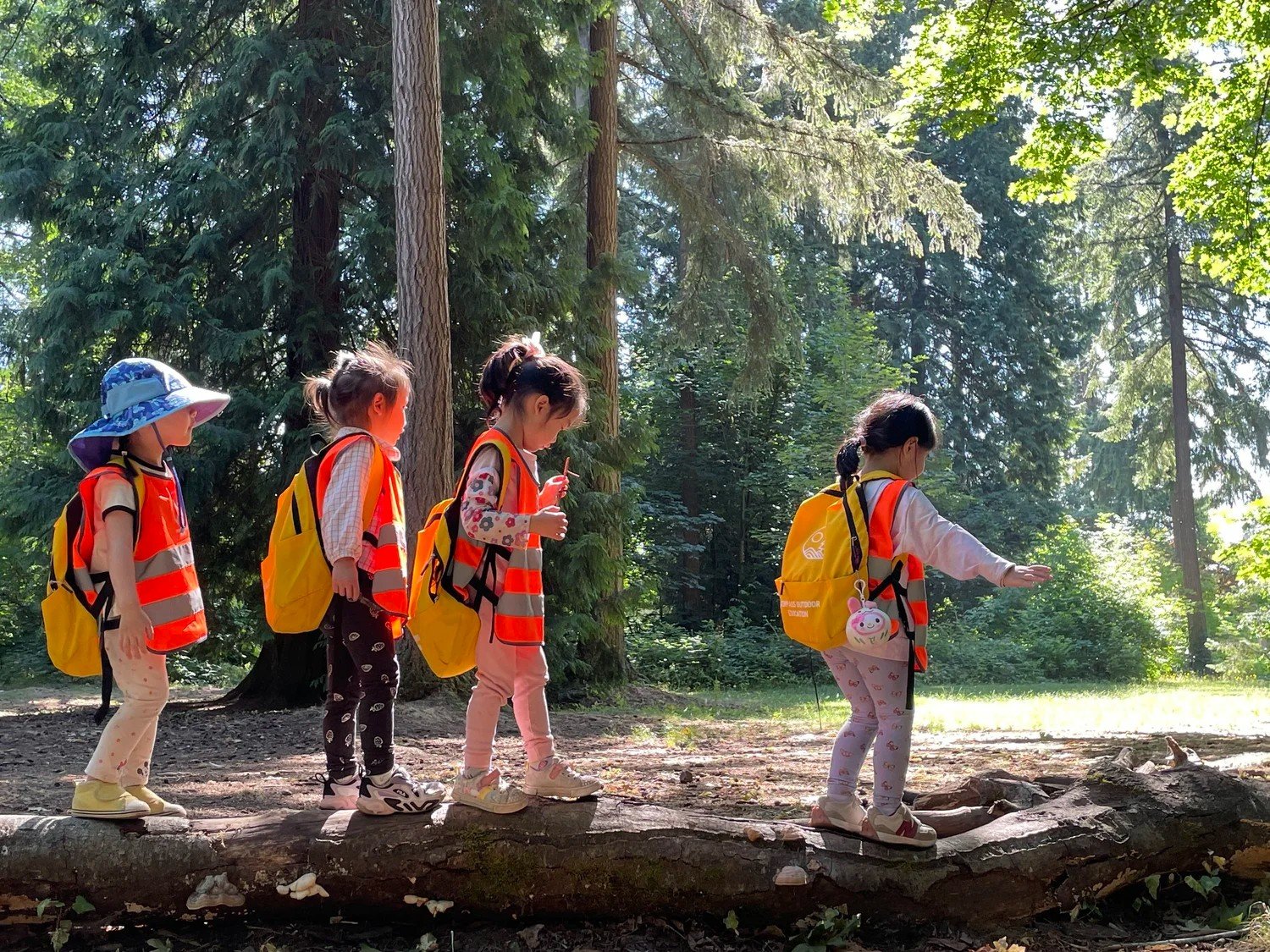
Rain teaches children to look after themselves
There is a Scandinavian saying that there is no bad weather, only bad clothing. It is not quite true; some days really are too stormy to be outside. But on most wet days the saying holds, and it carries a lesson of its own.
When children learn to zip their own rain jacket, tuck their pants into their boots and choose a spot that will stay dry for snack, they are practising independence. They begin to read conditions and make small decisions. A wet sleeve is uncomfortable, and next time they remember the cuff.
I grew up in Shangqiu, in Henan, and came to Canada at eighteen. Children I grew up with were often told to come inside when the weather turned. Here, I have watched how much children gain when we teach them how to be outside well instead. Both cultures care deeply about children's safety. The difference is whether we protect children from the weather, or prepare them for it.
Rain builds resilience, quietly
Nobody needs to give a speech about grit on a rainy morning. Children feel it.
The first ten minutes are often the hardest. Then something shifts. They are building a shelter that actually keeps the rain off. They are testing which leaves make the best boats. They are laughing because everyone is equally wet. By lunchtime, the rain is part of the adventure rather than a problem.
That small experience, of starting uncomfortable and finishing proud, is one of the most useful things a child can carry into school and into life.
Rain is a reason to plan, not a reason to cancel
None of this means we ignore the weather. Good outdoor education takes rain seriously.
At Compass, every venue has a rain plan. On some days the program moves partly indoors; for example, a wet day in Pacific Spirit Park can become a morning at the Museum of Anthropology, where the same theme continues among the collections. On warnings for thunderstorms, strong wind or poor air quality, we leave exposed trails and move indoors. Parents are told about any venue change before drop-off.
Small groups matter here too. With 1 adult for every 4 children aged 3–6, and 1 for every 8 aged 7–12, our teachers can check that every child is warm, fed and dry enough, and change the plan quickly if they are not.
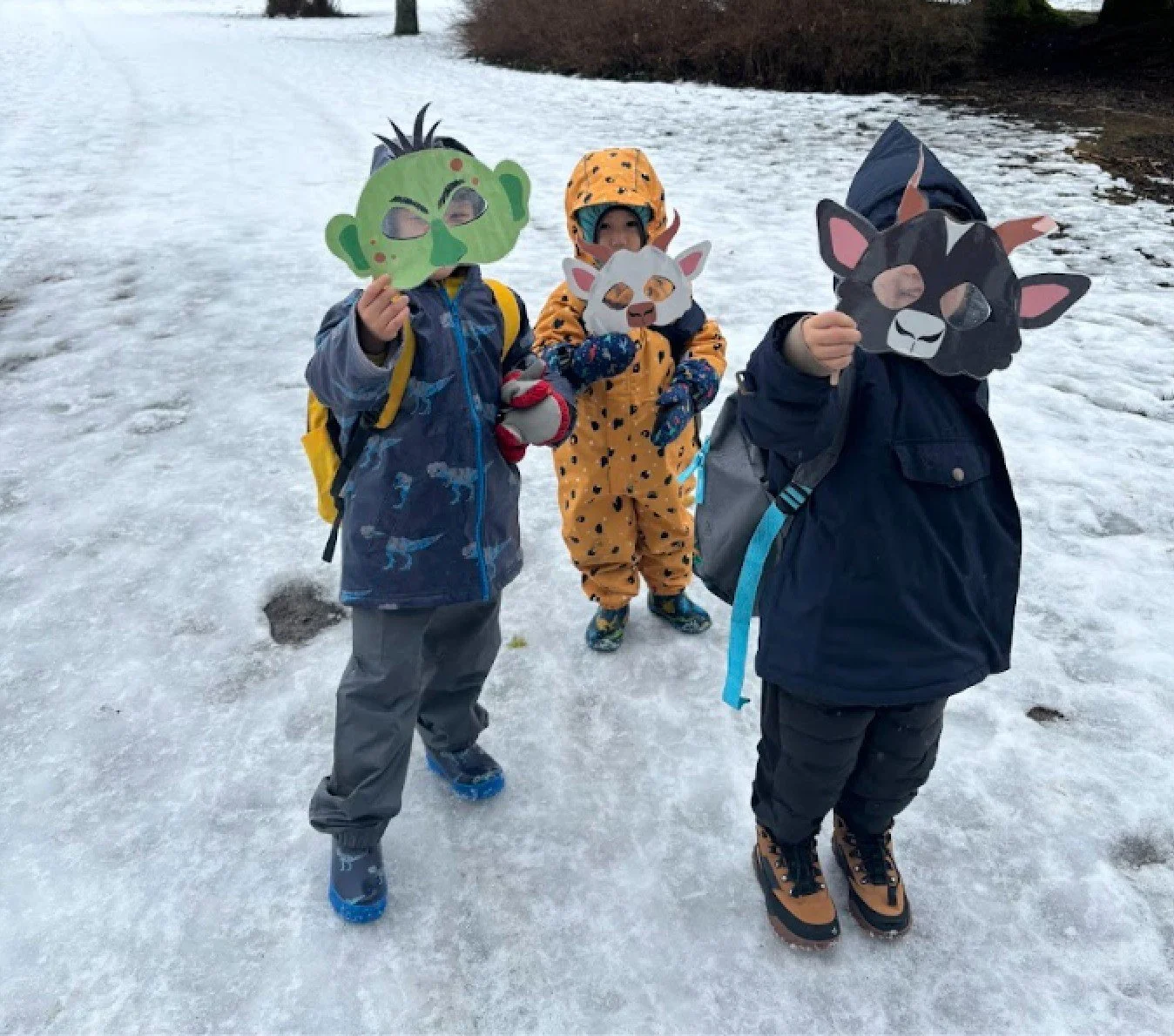
What children need on a wet day
If your child is joining an outdoor program this season, these make the biggest difference:
A fully waterproof jacket with a hood, and waterproof pants
Rubber boots or waterproof hiking boots, with warm socks
A warm layer that is not cotton (fleece or wool)
A spare set of clothes in a bag
Gloves and a hat in the colder months
A labelled water bottle and a lunch they can eat with cold hands
Pack it the night before, and let your child help. It is the first lesson of the day.
Learning that sticks
John Dewey wrote, in Experience and Education, that there is "an intimate and necessary relation between the processes of actual experience and education." I think about that line often on rainy mornings. Children do not remember the worksheet about the water cycle. They remember standing under a cedar and watching the rain run down the bark.
So when parents ask what we do when it rains, I say: we go out prepared, we learn something we could not have learned on a sunny day, and we come home a little muddier and a little more capable.
If you would like to see how this works in practice, have a look at our Winter Break Camp, read what to look for in a premium outdoor camp, or explore our approach to place-based learning.