
By Lulu Wang, founder of Compass Outdoor Education
The school winter break in Vancouver is long, dark and wonderful, and for many working families it is also a scheduling puzzle. Two or three weeks without school, short days, rain, maybe snow on the North Shore, and a child who still needs to move, think and see friends.
A good winter break camp solves the childcare problem. A great one gives your child something to talk about at the dinner table. This guide explains what to look for in a winter break camp in Vancouver, and what a day at Compass looks like.
What makes winter break different from summer
Summer camps can rely on long days and dry trails. Winter break camps cannot. The best ones are built around the season rather than in spite of it:
Shorter daylight. Outdoor time works best in the middle of the day, with a clear plan for the darker edges.
Wet and cold weather. Every outdoor venue needs a rain plan and an indoor backup.
Holiday schedules. Families travel, host relatives or work through the holidays. Flexible booking matters more than in summer.
Busy venues. Museums and attractions are popular over the break, so group bookings need to be organised well ahead.
Book by the day, not only by the week
Many families do not need a full two weeks of camp. You might need three days before Christmas, two days between Christmas and New Year, and a few more before school starts again.
Look for a winter break camp that lets you book single days. At Compass, every winter break day is its own experience with its own theme and venue, so children can join for one day or for the whole break without repeating a program.
Look for a mix of outdoors and indoors
The strongest winter programs combine time in parks and on the mountain with days inside museums and learning centres. That mix keeps children curious and keeps everyone safe when the weather turns.
This season, Compass winter break days take place at venues across Vancouver, the North Shore and Britannia Beach, including Queen Elizabeth Park, Science World, the Vancouver Maritime Museum, the Britannia Mine Museum, the Vancouver Aquarium, the H.R. MacMillan Space Centre and Grouse Mountain. Each day has a theme designed for that place, from investigating snowflake symmetry in the park to engineering challenges at Science World.
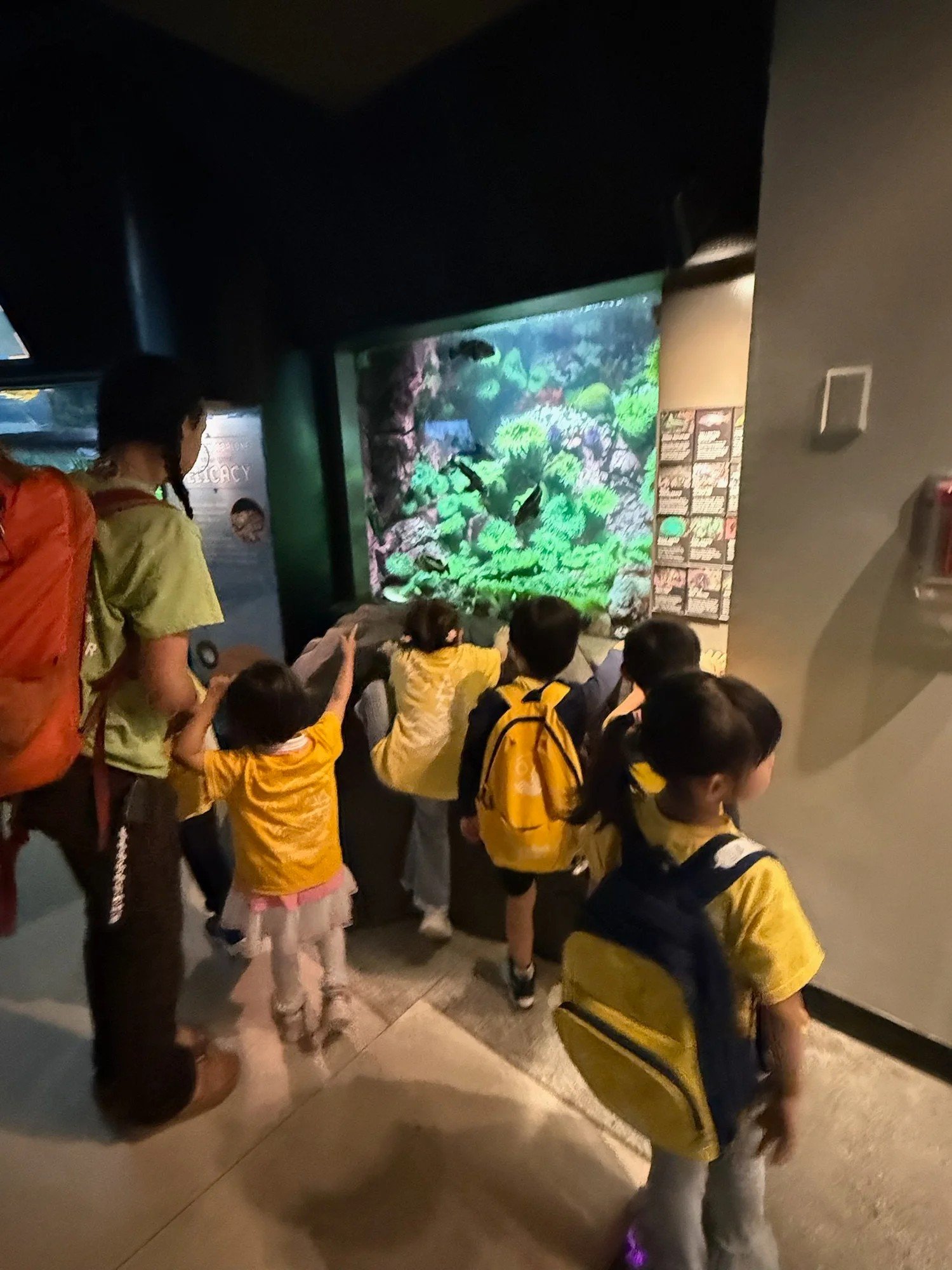
What a Compass winter break day looks like
Every day runs from 10:00 to 4:00.
Morning: arrive and begin. Parents drop off directly at the day's venue. We send the map location in advance. Children are signed in by their teacher and meet their small group.
Mid-morning: explore with a question. Each day starts with a question tied to the theme. Why does every snowflake have six sides? How do animals keep warm in winter? What makes a firework change colour? Children observe, collect clues and record what they find.
Lunch and a warm-up. Children eat together, with time to rest and get warm and dry.
Afternoon: build, test, share. The afternoon is hands-on. Groups might engineer a winter shelter, run an experiment, or create something to take home. Before pick-up, children share what they made and what they discovered.
Younger campers (ages 3–6) and older campers (ages 7–12) follow the same theme at different depths. A four-year-old might explore snow with all five senses; a ten-year-old might test which materials insulate best and explain why.
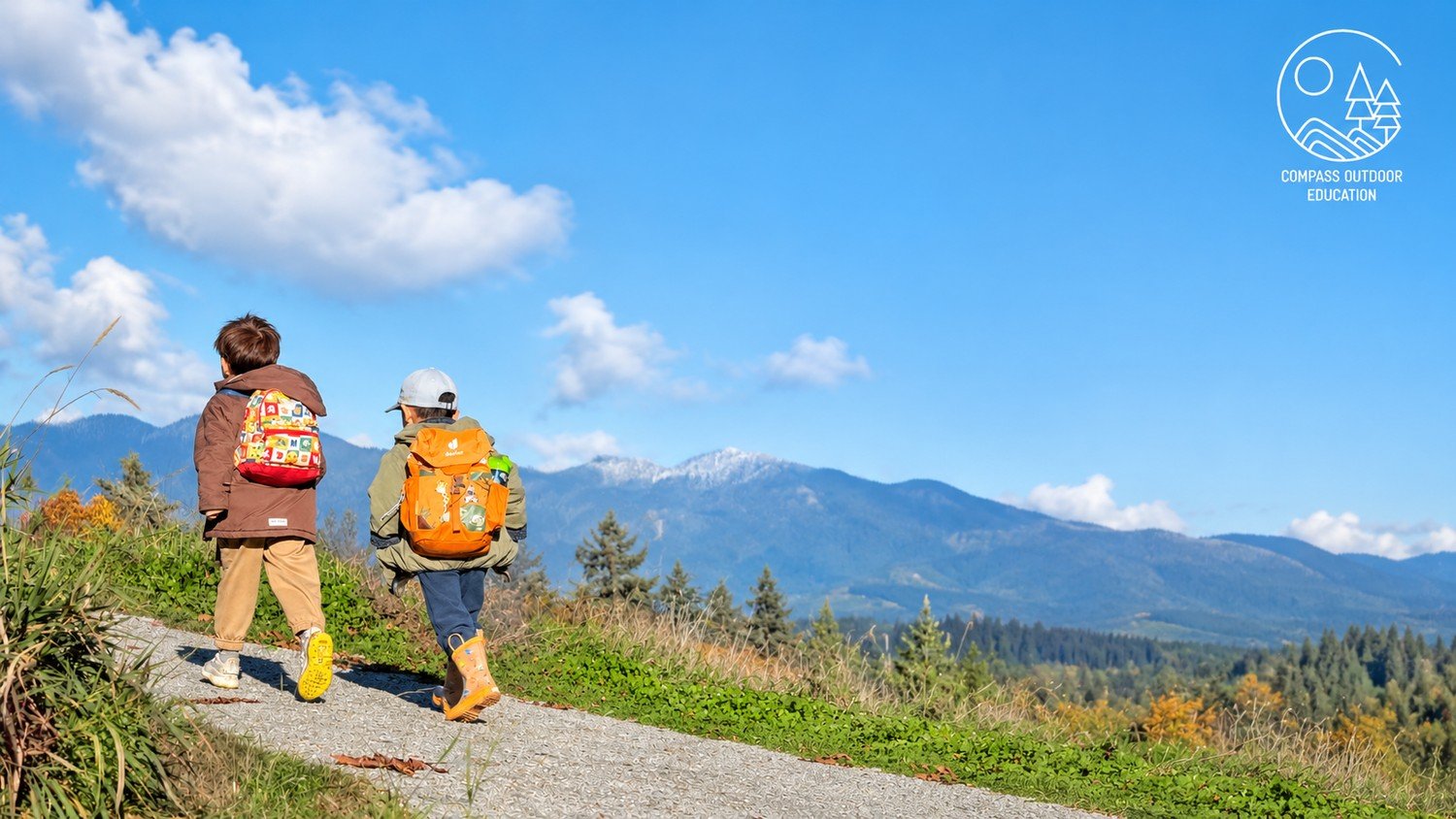
Small groups make the season work
Winter conditions call for close attention. At Compass, every group runs at 1 adult for every 4 children aged 3–6 and 1 adult for every 8 children aged 7–12. Every staff member holds current First Aid/CPR certification and a criminal record check, and our team includes Mandarin-speaking staff.
Before camp, we collect each child's emergency contacts, health information and allergies. If your child carries an EpiPen or inhaler, it stays with their group all day.
What to pack
Waterproof jacket and pants, or snow pants for mountain days
Waterproof boots and warm socks, plus a spare pair
A warm non-cotton layer, a hat and gloves
A full spare set of clothes
A labelled water bottle and a packed lunch with snacks
Any medication, inhaler or EpiPen, clearly labelled
For more on why we keep going in the rain, read Why Rain Is the Best Teacher. If you are still comparing options, our checklist for choosing a premium outdoor camp may help.
Ready to plan the break?
You can see every winter break day, theme and venue, and book single days or full weeks, on our Winter Break Camp page. Spots are limited per age group because of our small ratios. If you have a question about a particular day or your child's needs, get in touch and we will help you plan.